
The Popularity Of Flavored Coffee Drinks


8.10.2008
 These types of flavored coffee are actually causing people to stand up and take notice of this beverage especially as people's tastes evolve. While they start out drinking coffee that has a lot of cream and sugar in them, over time they will put less and less cream and sugar and may even start to drink it black. With all of the different choices of flavored coffee available, maybe it is time for you to try something new.
Brief History of Flavored Coffee
In the 1990s, flavored coffee became very popular. However, this type of coffee can actually be traced back several centuries to the Turks. Over time, a lot of people have developed strong feelings about this type of coffee; either they love it or they hate it and only want to drink naturally flavored coffee.
Flavored coffee is made by adding flavored oils to the beans after they have been roasted and before they have been ground. Another way in which this coffee can be made is by adding liquid flavors to the coffee while it is being prepared, in much the same was as cream and sugar are added.
Types of Flavors
Generally speaking, there are four categories of this type of coffee. The first category includes flavors based upon spices such as clove, cinnamon, anise, and cardamom. Next, there are also some coffee flavors that are based upon fruits such as coconut or raspberry. Chocolate based flavors are the next type with the most common being chocolate mint. Lastly, some flavors are based upon nuts like vanilla, hazelnut or macadamia nuts. Crème coffees also have their share of followers; these include flavors such as Irish Creme or French Vanilla coffee.
As you can see, there are a lot of different ways in which coffee can be prepared. There are also dark roast, light roast, espresso and regular coffee. After deciding on the blend, flavor and the roast, you have the option of drinking it black or with cream and sugar added.
Roland Jefferson
Labels: coffee, coffee art, coffee luwak, coffee recipe


The Bigelow Green Tea
7.18.2008
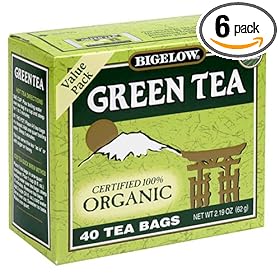
R.C. Bigelow, Inc. was begun in 1945 by Ruth Campbell Bigelow, a tea connoisseur who wanted to offer even more taste opportunities to American tea drinkers. Among the teas that Bigelow presents is their wonderful Green Tea. Green tea is now very popular, due to its antioxidants and other health benefits.
Overall,this tea is excellent for hot tea, with a great smell and taste. But, that's not all: Bigelow's Green Tea also makes a great iced tea! So, if you are looking for a delicious and healthy green tea, one that tastes great hot and cold, then get this one! I highly recommend it.
I worked on cruise ships for years as dining room staff and I found out that this tea is the most favorite tea among others. Yes, we are short to this tea fast in a cruise, even in a 3 day cruise!
Labels: bigelow green tea, black tea, coffee, cruise ship, cruise vacation, green tea, green tea extract and weight loss benefit, green tea health benefit
Ceramic Coffee Travel Mug
6.27.2008

Large Travel Coffee Mug with Wide Bottom - this functional and stylish mug has a wide base to rest easily on your desk or dashboard, and has a polypropylene drink-through lid to retain heat and prevent splashes. The 16-ounce travel coffee mug is microwavable and dishwasher safe, has an easy to grab handle as well as the class, purity and heft of stoneware. Available in white, this mug meets California standards for lead content.
Labels: brewed coffee, coffee, coffee luwak, coffee mugs
Coffee And Tea - Caffeine Source Revealed
5.03.2008

Caffeine, that magical element in coffee that shakes you up and wakes you up, is present in an even greater amount in a sister beverage known as tea.
We are all busy and a lot of us are overloaded with work. Managing a family and at the same time juggling a packed schedule can prove to be a daunting task. Under such circumstances, a dose of freshly brewed coffee or tea is the best thing that keeps people going.
Coffee and tea can be consumed in different ways in different seasons. During the winter and cooler months, when we wish that everything liquid could pass over our tongues and down our throats, should be warm or perhaps scaling hot. Brewing becomes an affair involving steaming cups of coffee and tea being served with wild abandon, not just for the freshness of the drink, but also for the warmth they provide by the additional caffeine supplied energy. Come summer and the recipe changes. Coffee goes into the blender instead of the coffee pot, where it is joined by ice cubes and other ingredients to make a cool shake. Tea manages to escape the violence of the blender and gently seeps away into ice water.
While previously, both coffee and tea were available in the state that they were grown. There is a choice available today, in the sense, that you can purchase either of them as caffeine free (decaffeinated) products.
Caffeine is good, but for people with sensitive sleep cycles it can be a bit of a bother. There can be a craving for coffee and tea at odd times (like just before going to sleep) and a cup that is not decaffeinated can keep these people awake for a long time. By choosing the decaffeinated option, they can enjoy their coffee and tea more casually.
What remains a constant mystery is that downers made out of alcohol are such great party makers, while the brain sharpens and activity enduring caffeine laced beverages like coffee and tea are more associated with comfort.
Most people will usually stick to either coffee or tea as their caffeine beverage of choice. This distinction can get pretty difficult when you consider that there are plenty of people who will drink coffee at certain times and switch to tea at other times, all within a single day.
There are even some places and cultures where the beverage is chosen, not on the basis of the time of the day, but on the gender of the drinker. When you are over there, you will notice that tea is decidedly a ladies’ drink (much like gin and tonic) while coffee is bit more like cigars and usually men indulge in it.
However, like everything the beverage culture is also undergoing a change and today the choice of beverage is solely dependent on personal preference.
source: isnare.com
Labels: brewed coffee, coffee, coffee and tea, green tea
Coffee History
4.30.2008

What variety is it and where do all these exotic tasting beans grow?
Let’s take a quick tour.
The African country of Ethiopia is where Coffee growing first originated. Today it is hard to imagine that the country’s main coffee plantations still consist of mainly wild coffee tree forests just like it was when it was first discovered centuries ago.
From these humble beginnings coffee bean production and consumption has spread like wild fire throughout the world. In the twenty-first century coffee has grown to become the second largest international market globally, second only to oil in dollar value terms.
Coffee is grown in over 70 countries around the world which are specifically located in tropical and sub-tropical agricultural regions. Climate dictates where it can be grown for the simply reason the plants need plenty of sunshine and rain. From a narrow band centred on the equator of around 23 degrees north to 25 degrees south comes all of the world's production of beans that produce the beverage of which a Turkish proverb describes as 'black as hell, strong as death, sweet as love'.
Brazil is by far the largest producer of coffee beans in the world with an average output of 28% of the total annual international yield. The second largest producer is the world renowned Columbia which produces 16%. Other major producers are Indonesia producing 7% and Mexico with 4%.
Throughout the history of its cultivation, coffee trees have been grown at high altitudes because they produce the best quality beans. However the plant has also adapted well to a wide variety of areas including Brazil where the plantations cover huge areas of agricultural land and employ hundreds of workers. In Colombia the coffee trees are grown in very rugged terrain in the high mountains where it is carried out by pack mules.
In Hawaii coffee is mostly planted on the slopes of the Mauna Loa volcano which is situated about 20 degrees north of the equator. As you would imagine the black volcanic ash is extremely fertile and perfect for growing the famed Kona coffee plants. The strong afternoon sun is softened by tropical clouds and frequent showers of rain.
Since the Dutch colonists introduced coffee to Indonesia in the 17th century, this collection of islands has slowly increased it’s production and exports to become the third largest producer in the world. A multitude of small one to two acre farms make up the bulk of producers thriving on the warm, tropical micro-climates, which is ideal for growing quality coffee.
Mexico also produces and exports a significant amount of coffee beans that are grown by a multitude of small farmers. Most plantations are located to the south of the country in Veracruz, Oaxaca and Chiapas.
In the mid-19th century the French missionaries established small plantations of the robusta coffee plants in Vietnam. From these small beginnings the industry has grown to massive proportions where today the size of the country’s coffee production now rivals Indonesia.
This is only a brief overview of the major producers for coffee varieties around the world with many other countries now venturing into this profitable export commodity.
Enjoy!
Labels: brewed coffee, coffee, coffee art, coffee history, coffee luwak
What Is Espresso Coffee?
4.24.2008

Espresso coffee is more popular today than it has ever been at any time in its history, perhaps thanks to the marketing power of coffee giants such as Starbucks. Many of the most popular drinks that we consume everyday are made using espresso, rather than the more traditional filter or drip coffee. Drinks such as lattes, cappuccinos, mochas and machiatos.
Given this strong popularity for these espresso drinks, it's surprising that many people don't actually know what an espresso is. For anyone who has never had an espresso, the first taste can be quite shocking. An espresso is very concentrated, and comes in a very small cup. However, it packs a large punch and the flavor can take some getting used to. (In other words, your first impression might be that you just swallowed something vile. But don't worry, it gets better with experience.)
Espresso is made by forcing very hot (not boiling) water through finely ground coffee. The coffee is ground more finely than filter coffee, but is not as finely ground as Turkish coffee, which is more like a fine powder.
Originally, espresso machines used steam pressure to force the water through. Today, a spring piston lever machine is used, which used a piston to generate the pressure and force the water through the coffee. It is important that the temperature does not go too high or low, as this will spoil the beverage. The ideal temperature is 85 to 95 degrees Celsius.
If the water is too hot, the espresso will be too bitter. If it is too cold, it will be too sour. As you can see, making espresso drinks is a very exacting job, and care must be taken to do it right. The people trained to do this are called baristas (which is Italian for barman).
As the water blasts through the coffee, it extracts the flavor, oils, sugars and proteins and dissolves them. This results is a very potent mixture that has a very strong, yet rich and subtle flavor. It also has all the caffeine of a large cup of filter coffee, giving it a strong kick.
To enjoy these drink at its best, it is important to drink the coffee as soon after it is made as possible, definitely within 2 minutes. If you intend to blend it to make espresso drinks, you need to do so within 10 seconds of pulling the espresso.
This is because the flavor packed volatile molecules in the drink rapidly degrade, both through contact with oxygen and as the heat leaves the drink.
The espresso is made up of 3 different parts, the heart, body and the crema, which is the delicate, creamy foam that naturally forms on the top of the drink. The crema is a sign of good espresso, and care should be taken to ensure it is preserved. To do this, some people use pre warmed shot glasses, which prevents heat loss.
There is no such thing as an "espresso roast" - you can make good espresso from light or dark roast beans. A very dark roast is a bad idea, as it can lead to a burnt, charcoal taste. The only important thing is that the coffee is ground to the correct grade, and that the beans are freshly roast.
Selecting the blend is important when making espresso drinks, as it is for any kind of coffee drinks. The factors to concentrate on are sweetness, aromatics and smoothness.
Also, the type of grinder used is important. The best choice is a conical burr grinder. This will produce a consistent grind (the particles will all be the right size), and will also make sure that the coffee does not overheat as it is ground (this would spoil the aroma).
How to make the best espresso drinks could fill books, as there are many factors to balance. This is why coffee shops spend so much time training their staff. When you find a place that serves excellent espresso, recognize that this is not just a happy accident, and recognize the skill and care that goes into making this most demanding drink.
Labels: aroma, brewed coffee, coffee, coffee recipe, coffee shops, espresso
Tiramisu cake, my other favourite
4.09.2008

This kind of sponge cake is one of the most delicious cake ever. I looked up from wikipedia,
"Tiramisu"(Italian language: "Tiramisù" / Veneto: "Tiramesù", /tirame'su) is one of the most popular Italian cuisine desserts. It is a made of biscuits dipped in coffee and mascarpone cream. For many years, different sources from Vin Veneto, dated 1981, to the Italian Academy of Giuseppe Maffioli and several cuisine websites give evidence that tiramisu was born in Treviso at "Le Beccherie" restaurant in the hands of the confectioner Roberto Linguanotto, also known as Loli.
Different stories report the creation of the cake to have been born in the city of Siena. Some confectioners were said to have created it in honour of Cosimo III on the occasion of his visit to the city.
These days, the cake is characterised by a delicate and intense taste. In order to prepare it, according to the original recipe, the following ingredients are needed: Lady Finger (cookie)/Savoiardi biscuits, eggs, sugar, rum and cocoa.
In the original recipe, there was no liquor as the cake was originally aimed at children and the elderly and the original shape was Circle/round. The name Tiramisu is from Italian and means "pick me up" (Tirami sú)
Well, in my opinion, the most interesting taste of this cake delivered from the layer of coffee covering your tongue. Have a bite, and enjoy.
Labels: cakes, coffee, cookies, miscellaneous, tiramisu cake
Again, I like this coffee article
3.26.2008

Delicious Choices For The Coffee Connoisseur
Coffee is a beverage, served hot or with ice, prepared from the roasted seeds of the coffee plant. These seeds are almost always called the coffee bean. It is one of the most popular beverages in adults today.
The coffee bean, itself, contains chemicals which are mind-altering (in a way some find pleasing) to humans as a coincidental result of their defense mechanism; those chemicals are toxic in large doses, or even in their normal amount when consumed by many creatures which may otherwise have threatened the coffee beans in the wild.
A coffee bean from two different places usually have distinctive characteristics such as flavor (flavor criteria includes terms such as "citrus-like" or "earthy"), caffeine content, body or mouthfeel, and acidity. These are dependent on the local environment where the coffee plants are grown, their method of process, and the genetic subspecies or varietal.
Some well-known arabica coffee beans include:
* Colombian - Coffee was first introduced to the country of Colombia in the early 1800's. Today Maragogype, Caturra, Typica and Bourbon cultivars are grown. When Colombian coffee is freshly roasted it has a bright acidity, is heavy in body and is intensely aromatic. Colombia produces about 12% of the coffee in the world, second only to Brazil.
* Colombian Milds - Includes coffees from Colombia, Kenya, and Tanzania, all of which are washed arabicas.
* Costa Rican Tarrazu - from the Tarrazu Valley in the highlands outside of San José, archetypal estate coffee is La Minita.
* Guatemala Huehuetenango - Grown at over 5000 feet in the northern region, one of the most remote growing regions in Guatemala
* Ethiopian Harrar — from the region of Harar, Ethiopia
* Ethiopian Yirgacheffe — from the area of the town of Yirga Cheffe in the Sidamo (now Oromia) region of Ethiopia
* Hawaiian Kona — grown on the slopes of Hualalai in the Kona District on the Big Island of Hawaii.
* Jamaican Blue Mountain — From the Blue Mountain region of Jamaica. Due to its popularity, it fetches a high price in the market.
* Java — from the island of Java, in Indonesia. This coffee was once so widely traded that "java" became a slang term for coffee
... and more.
Some coffee bean varieties are so well-known and so in-demand that they are far more expensive than others. Jamaican Blue Mountain and Hawaiian Kona coffees are perhaps the most prominent examples. Often these coffee beans are blended with other, less expensive coffee beans and the suffix "blend" added to the labelling, such as "Blue Mountain blend" or "Kona blend" even though they only contain a small amount of the coffee bean mentioned.
One unusual and very expensive variety of robusta is the Indonesian Kopi Luwak and the Philippine Kape Alamid. The coffee bean is collected from the droppings of the Common Palm Civet, whose digestive processes give it a distinctive flavor.
source :isnare.com
Labels: brewed coffee, coffee, coffee and tea, coffee luwak
Still About Coffee
3.24.2008

Yup, still about coffee. This is a poster I found in allposters.com. I like this picture. So, I put this here. Hope you like it, too.
Labels: brewed coffee, coffee, coffee and tea, coffee poster
I just love coffee
3.21.2008

This coffee drink diagram/illustration makes sense of all the espresso based coffee options available, in very simple terms. From the Latte to the Cafe Breve. Ingredients, and their approximate amounts. They are not perfect, but a good reference guide.
Labels: brewed coffee, coffee, coffee and tea, coffee art, coffee recipe
Coffee art
3.18.2008

Still about coffee!
I used to zipped cappucino when I was on board the cruise ship, slightly before I work for dinner time in the dinning room. I browsed some pictures about cappucino in the internet and, I found these pictures. Coffee is an art. there is some art in coffee making. There is art in coffee zipping. Yup, Coffee is art itself. Ha ha..
 yummie doggie coffie
 blessful heart
 lotus coffee
 name it yourself
Well, do you agree with me?
Labels: brewed coffee, coffee, coffee and tea, coffee art, coffee luwak
Coffee Luwak
3.09.2008

I am a coffee lover, and a few days ago I zipped a cup of instan kopi luwak. If I could say, that was the best coffee I've ever drunk. Funny, I didn't know that kopi Luwak is the most expensive coffee in the world, and it's originally made in my country, Indonesia. Here is a short article I picked from wikipedia about kopi Luwak.
Kopi Luwak (pronounced [ˈkopi ˈluwak]) or Civet coffee is coffee made from coffee berries which have been eaten by and passed through the digestive tract of the Asian Palm Civet (Paradoxurus hermaphroditus). The civets eat the berries, but the beans inside pass through their system undigested.
This process takes place on the islands of Sumatra, Java and Sulawesi in the Indonesian Archipelago, and in the Philippines (where the product is called Kape Alamid). Vietnam has a similar type of coffee, called weasel coffee, which are coffee berries which have been defecated by local weasels. In actuality the "weasel" is just the local version of the Asian Palm Civet.

Labels: coffee, coffee luwak, kopi luwak
cofee lover
3.08.2008
(I wonder, how can a cup of coffee refresh my mind?)
 Hire Me Direct


| ||


